In recent years, electrochemical synthesis has emerged as a highly promising frontier technology in the field of organic synthesis, owing to its significant advantages in green sustainability. The mild reaction conditions and controllable processes provide important support for the development of highly selective oxidation and reduction methods. Among various selective oxidation reactions, the efficient transformation of benzylic C(sp³)–H bonds in alkylarenes has attracted widespread attention from organic chemists. However, under current electrochemical conditions, the oxidation of benzylic C(sp³)–H bonds predominantly leads to over-oxidized products such as aldehydes and ketones (Figure 1A). This is mainly because the bond dissociation energy (BDE) and oxidation potentials of benzylic C(sp³)–H bonds in alkylarenes are very similar to those in the corresponding benzyl alcohol products. In sharp contrast, efficient methods for the direct electrochemical hydroxylation of benzylic C(sp³)–H bonds remain extremely limited.
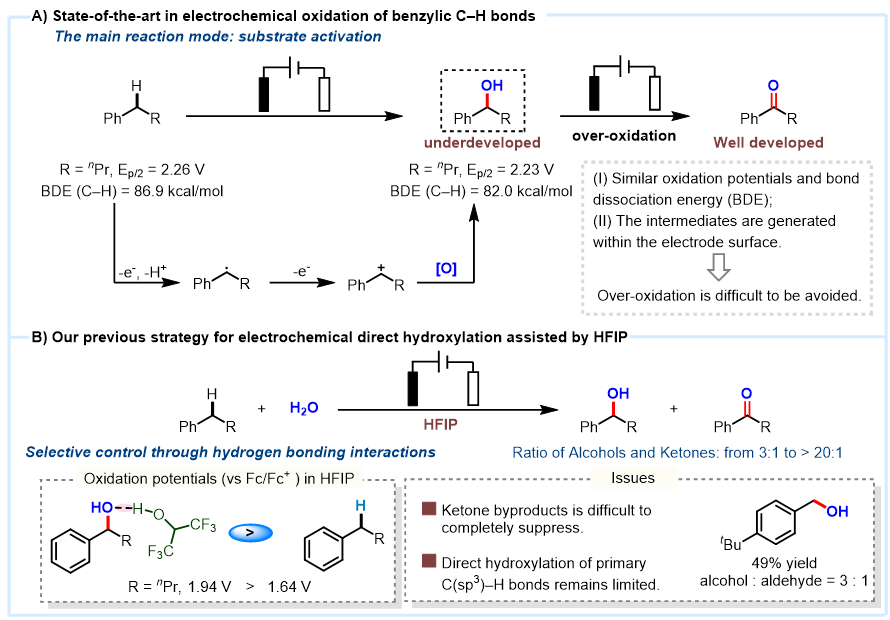
Figure 1. Electrochemical oxidation strategies of benzylic C(sp³)–H bonds.
Recently, the research group of Youai Qiu, building upon their previous studies on electrochemical transformations involving water (including deuterium oxide), and inspired by biomimetic iron catalysts for the selective activation of C(sp³)–H bonds, proposed an innovative strategy. In this approach, highly reactive iron-oxo species (Fe(IV)=O) are generated in situ via electrochemical activation of water in the presence of a biomimetic iron catalyst, thereby replacing the direct anodic oxidation of the substrate. Subsequently, electron transfer occurs between the iron-oxo species and alkylarenes, efficiently generating benzylic radicals, which then undergo an oxygen rebound process to precisely construct benzyl alcohol products. Notably, the reaction proceeds within a spatially separated “detached reaction layer,” where the generated benzyl alcohols are less likely to diffuse to the electrode surface, thus effectively blocking the over-oxidation pathway. This method exhibits several key advantages: (a) Exclusive hydroxylation of benzylic C–H bonds enabled by the combination of a detached reaction layer and the oxygen rebound mechanism; (b) Broad substrate scope, compatible with primary, secondary, and tertiary benzylic C–H bonds; (c) Applicability to the late-stage functionalization and synthesis of bioactive molecules, demonstrating strong synthetic potential; (d) Successful direct hydroxylation of natural products with excellent site selectivity, providing a new strategy for the modification of complex molecules. Relevant achievements were published in Angew. Chem. Int. Ed., 2026, DOI: 10.1002/anie.9980873.


