From October 8 to 10, the 2026 Academic Exchange Symposium for Young Scholars in Synthetic Chemistry, hosted by the Department of Chemical Sciences of the National Natural Science Foundation of China (NSFC) and organized by the State Key Laboratory of Elemento-Organic Chemistry at Nankai University, was held in Tianjin. Among those present were Yulu Chen, President of Nankai University; Jun Chen, Academician of the Chinese Academy of Sciences (CAS) and Executive Vice President of Nankai University; Junlin Yang, Executive Deputy Director of the Department of Chemical Sciences, NSFC; Yadong Li, CAS Academician and Professor at Tsinghua University; Yong Tang, CAS Academician and Researcher at the Shanghai Institute of Organic Chemistry, CAS; Wanbin Zhang, CAS Academician and Professor at Shanghai Jiao Tong University; and Qilin Zhou and Xianhe Bu, CAS Academicians and Professors at Nankai University. The opening ceremony was presided over by Yan Zhang, Director of Division I of the Department of Chemical Sciences, NSFC.
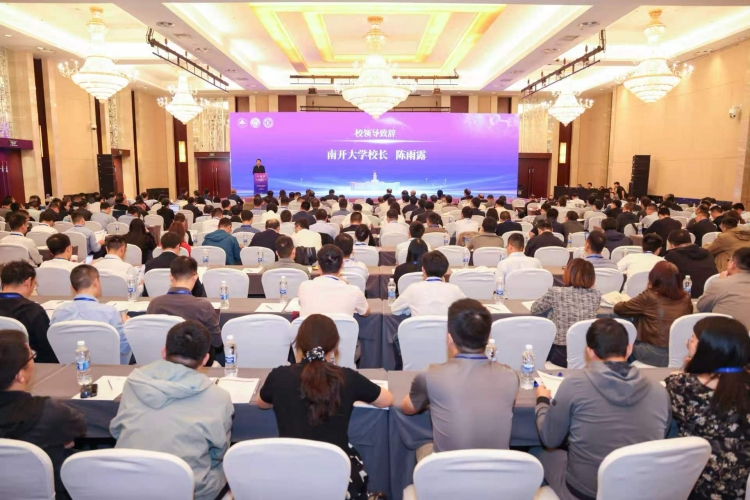
On behalf of the university, Yulu Chen extended a warm welcome to the attending experts. Synthetic chemistry, he noted, bears the mission of creating new molecules and constructing new substances; it is the foundation of innovation in the material sciences and underpins needs vital to the national economy and people's livelihood, from the discovery and development of new drugs and advanced materials to food security. After more than a century of development, Nankai's chemistry discipline has held fast to the ideal of serving the country through research and stands as a vivid epitome of the development of synthetic chemistry in China. He expressed the hope that the young scholars would take the symposium as an opportunity—drawing research inspiration from the clash of ideas and fresh creative energy from mutual learning—and scale the heights of science with youthful ambition.
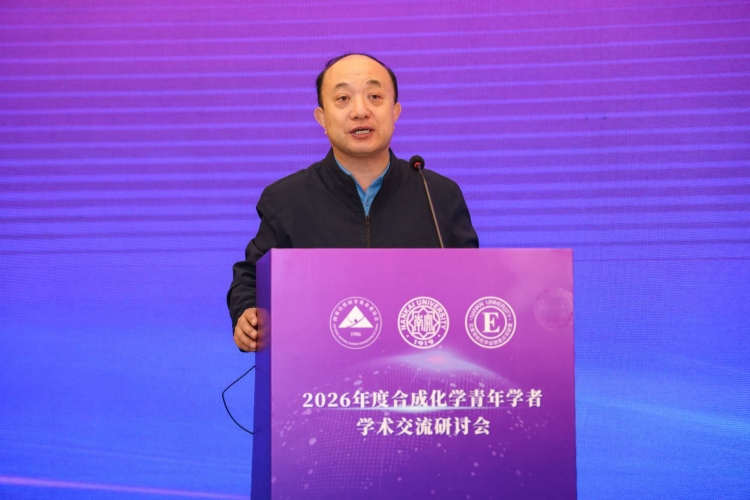
Junlin Yang thanked Nankai University for its careful preparation of the symposium and briefly outlined the NSFC's latest measures to deepen reform of the science funding system. Synthetic chemistry, he pointed out, is now moving toward multidisciplinary integration, data-driven research, and precise, green synthesis, and the essence of basic research lies in distilling sharp scientific questions and solving difficult scientific problems. He expressed the hope that the young scholars would define their scientific questions with precision, adopt new research paradigms to address them, and contribute their wisdom and strength to the development of chemistry and chemical engineering in China.
The symposium brought together more than 300 experts and scholars from over 90 universities and research institutes across China. Yan Zhang presented the overall program. Keeping to a single-session format, the symposium offered plenary lectures, oral presentations, and invited and regular poster sessions—a diverse program of exchange aimed at building a platform for face-to-face, in-depth academic interaction. Dozens of senior experts were specially invited to attend and provide guidance, steering the young scholars toward exchanges centered on original academic ideas.
At the symposium, Yong Tang, Wanbin Zhang, Yadong Li, and Qilin Zhou each delivered a plenary lecture, and Yan Zhang gave a report on the discipline. Sixty young scholars gave oral presentations on the scientific questions they pursue, their original research methods and approaches, and their representative findings. More than 140 academic posters were on display in all.
The symposium aimed to promote the high-quality, sustainable development of synthetic chemistry, to encourage young scholars to focus on the scientific frontier and devote themselves to original innovation and fundamental breakthroughs, and to foster integration both within the discipline and across disciplinary boundaries. Going forward, the State Key Laboratory of Elemento-Organic Chemistry at Nankai University will continue to draw on its deep disciplinary heritage and concentration of talent, build high-level platforms for academic exchange, and push for continued breakthroughs toward precise, efficient, green, and intelligent synthetic chemistry, adding fresh momentum to China's capacity for independent innovation in chemistry and chemical engineering.

