On April 15, at the invitation of the State Key Laboratory of Elemento-Organic Chemistry, Professor Ruben Martin from the Institute of Chemical Research of Catalonia (ICIQ), Spain, delivered an excellent academic lecture entitled “Ni-Catalyzed Functionalization of sp3 C-H Bonds” at the Academic Lecture Hall of Shixian Building as part of the Nankai University Lectureship on Organic Chemistry. The lecture was chaired by Professor Xiaochen Wang of the State Key Laboratory of Elemento-Organic Chemistry and attracted more than 100 faculty members and students from the laboratory and the College of Chemistry, who attended the lecture and participated in discussions.
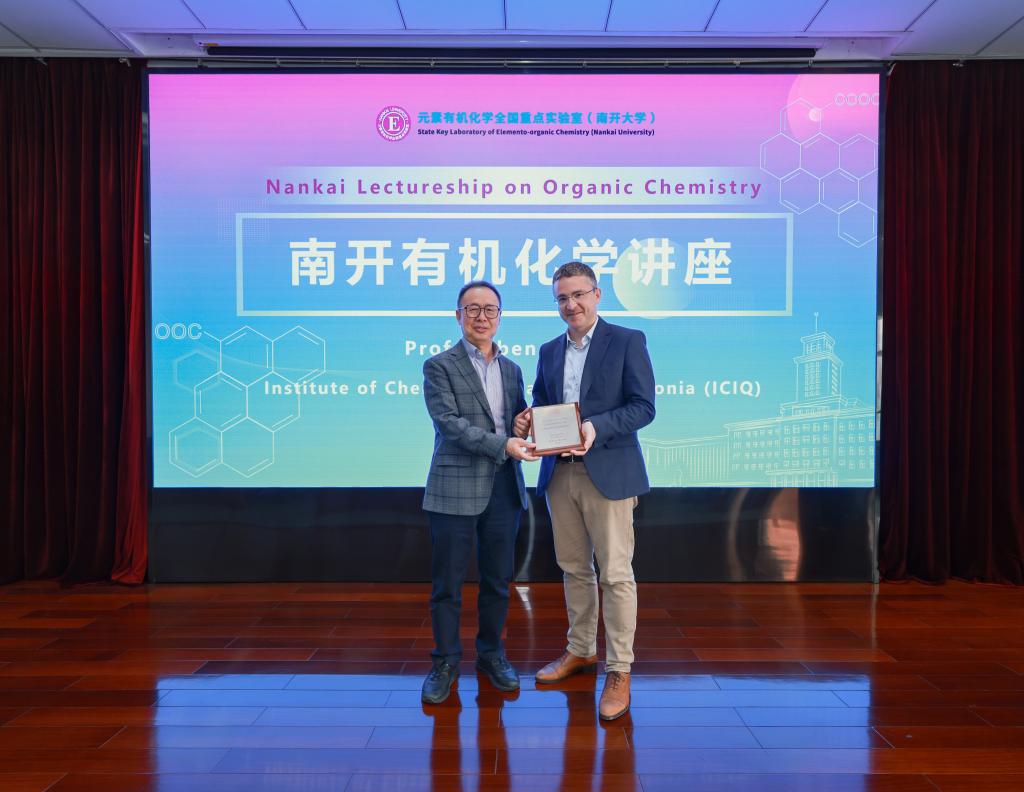
Before the lecture began, Academician Qilin Zhou of the State Key Laboratory of Elemento-Organic Chemistry presented Professor Ruben Martin with the certificate plaque for the Nankai Lectureship on Organic Chemistry. In the lecture that followed, Professor Martin systematically reviewed the development of nickel-catalyzed synthetic chemistry, presenting a number of classical alkyl- or aryl-nickel complex intermediates as well as various nickel-catalyzed transformation pathways. Addressing the previously held view in the chemistry community that, because of the intrinsic properties of nickel catalysts, β-hydride elimination is difficult to occur and thus limits their application in alkyl chain-walking reactions, Professor Martin pointed out that effective promotion of β-hydride elimination can in fact be achieved through ligand-structure modulation, thereby enabling alkyl chain walking. Furthermore, precise control over the reaction site can be realized by modifying the ligand and selecting appropriate reaction partners or directing groups. Professor Martin then presented the representative achievements of his group in recent years, offering an in-depth explanation of the reaction mechanisms and the principles governing site selectivity, and concluded with a perspective on the future development of nickel-catalyzed organic synthesis.
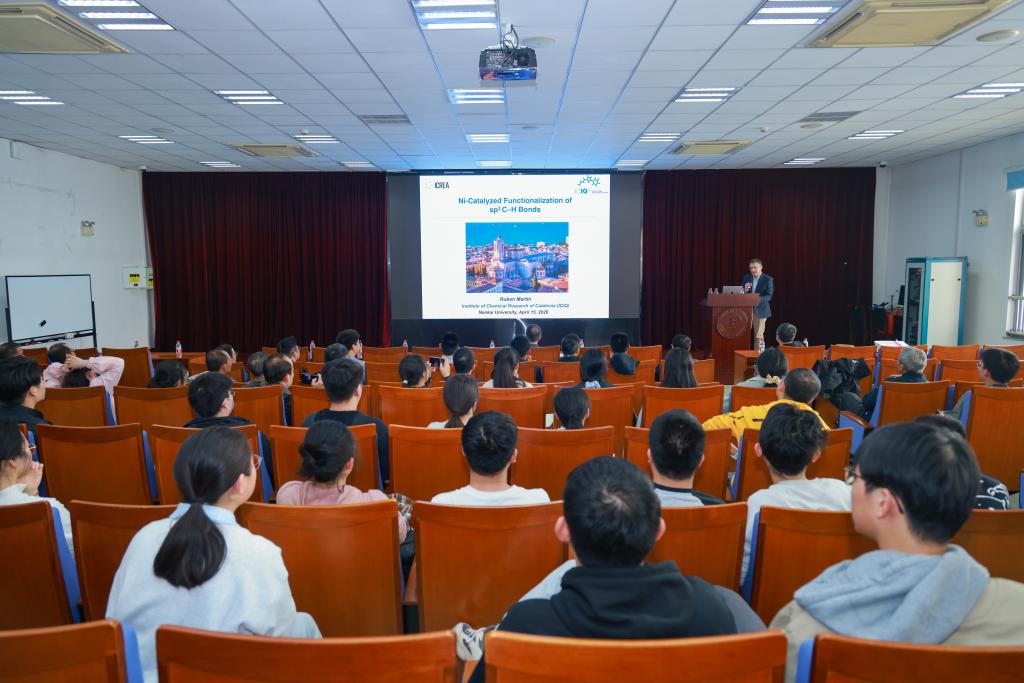
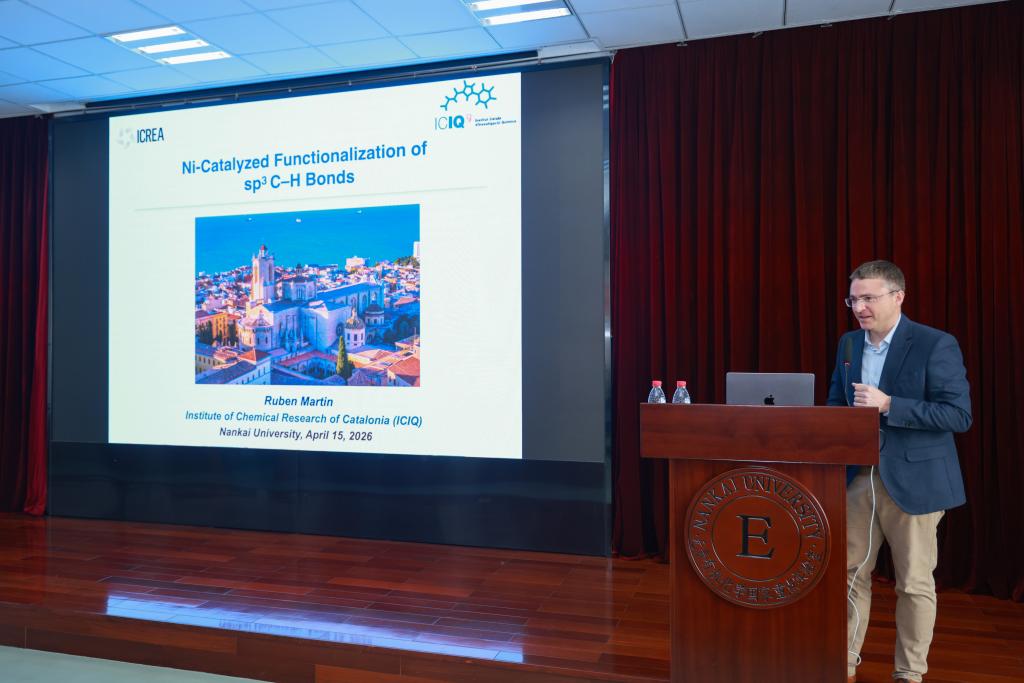
Following the lecture, faculty members and students in attendance engaged in lively and in-depth discussions with Professor Martin, and the venue was filled with a vibrant academic atmosphere.
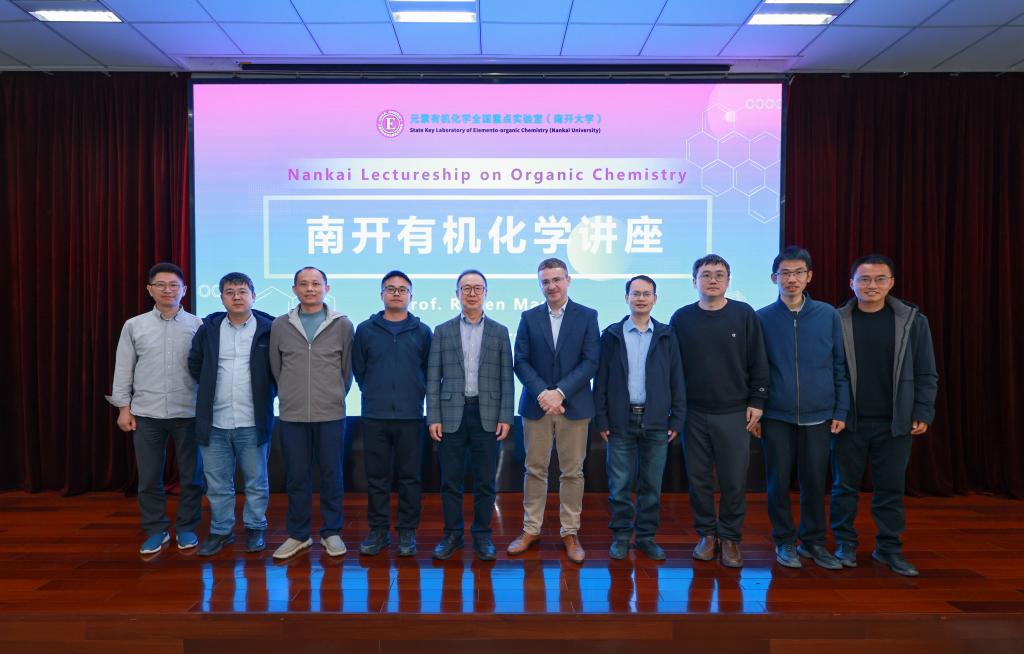
Professor Ruben Martin received his Ph.D. from the University of Barcelona in 2003. He subsequently carried out postdoctoral research in the group of Professor Alois Fürstner at the Max Planck Institute for Coal Research in Germany and in the group of Professor Stephen L. Buchwald at the Massachusetts Institute of Technology in the United States. In September 2008, Professor Martin joined the Institute of Chemical Research of Catalonia (ICIQ), Spain, where he began his independent research career as a group leader. Professor Martin’s research interests focus primarily on the development of synthetically useful new organometallic methods, including the catalytic functionalization of inert C-H, C-C, and C-O bonds, as well as the preparation of carboxylic acid derivatives from biomass-derived feedstocks such as CO2. In recent years, his group has achieved a series of innovative results in areas such as nickel-catalyzed sp3 C-H bond functionalization, alkyl chain-walking reactions, and migratory carboxylation. During his independent career, Professor Martin has received a number of important honors and awards, including the 2017 OMCOS Award and the 2020 Arthur C. Cope Scholar Award.

